
(Written 6.July.2012)
“Do not fear those who can kill the body but cannot kill the soul. Rather, be afraid of the One who can destroy both soul and body in HELL.”
I’ve had a lot of *God-given* time on my hands recently and have taken up to reading/rereading anything and everything that has caught my eye and fancy. Two such books—which, admittedly are starkly different in every sense of being different is Francis Chan’s “Erasing Hell,” and The Superman story arc, “Grounded.”

“Erasing Hell,” appears to have much to say about the recent topic of whether or not Hell exists, just what it is, and who’s going. While there is much I can say about it (all critical of its errancies and detriments), I will simply say that the feeling you get at the end—be it a follower of Christianity or not, is one of fear, doing more damage than good. Jesus is your only ticket of escape from Hell (a place of both ‘judgment,’ but also ‘punishment’), and you only get the opportunity to “choose” in this lifetime. If you haven’t chosen yet, are you sure you wanna go to Hell? And if you have chosen already, are you sure that you’ve really chosen?
I will warrant that Chan seems to have a good heart; a heroically large heart for Justice.
But not—as they say, a heart in the right place.
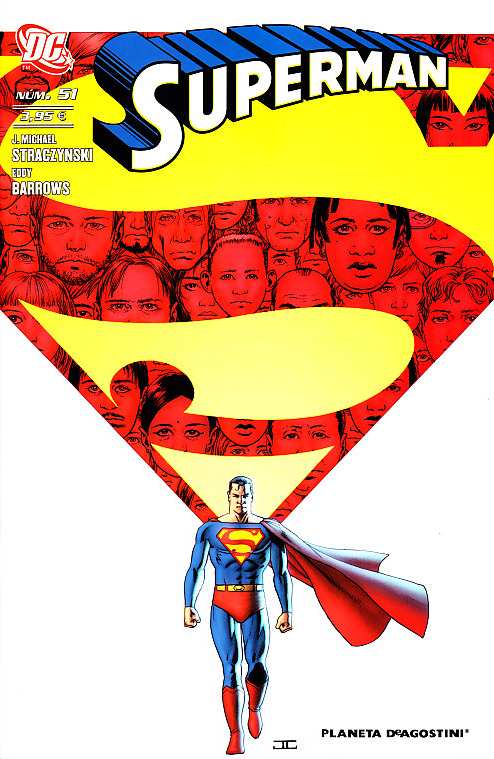
In “Grounded,” Superman—who feels he has lost touch with (not only*) humanity (*but American humanity), decides to take a walk (not fly) across America in order to regain a connection to why he became a hero in the first place.
Now it must be known that two different authors with two very different views as to what should be conveyed of Superman in this series wrote it. The author of the first half apparently wished to convey that superheroes have a disconnect from the common person, while the later chalks it up to Superman himself merely being depressed and grieving over recent events, the former shows Superman as he deals (apparently) for the first time with moral ambiguity, while the later shares in this struggle, but credits it to his clouded judgment caused by grief and depression.
I don’t need to get into a critique of which I preferred or thought was better, I merely wish to convey that both had their aspects and points which I took away.
(For the best critique I found on the series in its entirety, look here for a comparison, and here for just on the first volume.)
The story does indeed take an interesting twist when—in the penultimate issue of the series, Clark Kent goes out with a “Superman expert” somewhere in Portland, and asks various locals—strangers—the common man, questions about the hero. And while it is a great note that in the first volume, a woman—the voice of critique of Superman, calls him a gun, meaning that he being around can only be dangerous, it ends with the affirmation that Superman himself, is loved and appreciated for what he does, not the potential he has to do.
The following are the questions, and responses:
To a young boy: [whilst pointing to his Superman shirt] “Are you afraid of the guy this stands for?”
“Are you kidding? It stands for Superman! Who would be afraid of him?”… “Superman can do anything! But he only beats up bad guys, right? So why should I be afraid of him?”
To a woman: “Do you fear or distrust Superman?”
“What? Well, no! If you ask me, he’s all about the Truth.”… “It[is] more important to Superman to tell us a harsh but necessary truth than it was to go with a comforting lie.”
To a man: “Do you think that Superman harms or even kills the villains he captures?”
“Superman? Kill a dude? No WAY. Sometimes you kind of wish he would, when you see some of the monsters he goes up against.”… “I mean, I don’t know if I’d be able to hold back.”
Lastly, asking a family: “Do you resent the fact that Superman has superpowers and you don’t?”
“Resent him? We thank heaven every day that he can do things we cannot do.”… “He helps everyone who needs him.”
This last one can be seen at the end of the previous comic when Superman has an argument with his long time pal, Jimmy Olsen, about his redeeming an out of control super powered girl from destroying Las Vegas. (At one point, Superman noting that, “She’s acting like a child throwing a tantrum.”) Jimmy questions Superman’s willingness to not only save her from herself, but “sticking up” for her in court, noting how much—even after all this, that she hates him (Superman). Superman states that “We’ve all made mistakes. And everybody deserves a second chance.”
Ending the series left me curious just how people felt about the concept of Jesus.
So I printed out the two pictures below, and went around my neighborhood asking random people the same questions; first about the image of the Superman symbol, then about the image of the Cross and Jesus.

*Note* I did NOT—however, ask the same demographic of people the same questions. (That being, I did not try to find a young boy, a woman, a man, and a family of immigrants. I simply asked who was willing to talk the questions.)
1) “Are you afraid of the guy this stands for?”
Superman responses ranged from, “No, he’s a comic book character, he doesn’t exist,” to me clarifying the question of if he did exist, would you be afraid of him, “sort of. I mean, who’s to say I’m not as bad as the bad guys he faces? I don’t know what he would think about good and bad in our world. Would he seek me out for ‘justice’?”
Jesus responses also ran about the same: “No, I mean, I believe Jesus existed, but not what Christianity says about him, and I think he would say something like ‘keep on trying to be good,’ you know, ‘love people,’ ‘don’t start wars,’ that kind of thing. So yeah, I wouldn’t be afraid of him.”
This was the best capture, thought it is interesting to note that many felt a bit ‘superstitious,’ and that flat out saying, “I’m not afraid of Jesus,” would cause something bad to happen to them. Which would cause one to surmise that yes indeed, on some level, there is a fear of Jesus.
2) “Do you fear or distrust Superman/Jesus?”
This question ran a bit similar to the first in both cases of Superman and Jesus, but when it came to the concept of ‘truth’—when I probed a bit to get more of the response shown in the comic, I ended up changing the question to: “Do you think Superman/Jesus has a true character? That is to say, does Superman/Jesus represent a value for truth above all?”
It was then that I found that people’s responses shifted to a sense of knowing a person. They seemed to say that yes—at first token, both Superman and Jesus are about Truth. Various people spouted off slogans and coined phrases of each, to say that yes, Superman and Jesus are all about truth. Some responded that Superman stands for “truth, justice, and the American way,” and that Jesus said he was, “the truth, the life, and the light, and the way (though—many didn’t get all that, it was something that their mind went to, even if they didn’t know the full phrase.).”
Yet when further questioned, almost everyone stated that there was no way of knowing for sure, save for knowing them personally. (Some deeper thinkers even asserted the question as to whether or not they—being “higher beings” have a different, or even fuller concept of truth than we have.) That to know if they believe in truth, in absolute truth, value truth, fight for it; to know for sure can only be to know them personally; that it could just as easily be something attributed to them.
3) “Do you think that Superman harms or even kills the villains he captures?”
To Superman, near everyone—whether having some, none, or vast knowledge of the Super Hero, responded that no, Superman doesn’t kill, nor torture. Those that had more knowledge emphasized that he only did when he was under the control of ‘Red Kryptonite,’ a substance which—essentially, changes Superman into an entirely different character.
When it came to the Jesus side of the questioning, this got a little tricky and I had to rephrase it as follows:
“Do you think that Jesus punishes or turns away—sends to Hell, bad people?”
And to this, resoundingly the answer was yes. Many would say that Jesus ate and hung out with ‘sinners,’ bad people, but if they didn’t choose him, or follow him, God would send them to Hell. And that that’s where ‘bad people’ go.
Depending on how the conversation was going, I would then follow up by asking the first question again: “Does this make you afraid of Jesus—if you felt Him to actually be real?”
To which, the answer became, “yes.” Generally the consensus was that how are we to be judged as ‘bad’ if we spend our whole lives trying to be ‘good?’ That someone I don’t know sends me to Hell just for not knowing him is evil and scary, so ‘yes,’ there is reason to be afraid.
4) “Do you resent the fact that Superman has superpowers and you don’t?”
This was fun one to ask. For in our world, there aren’t super powered heroes (and if there were, they’d end up looking a lot more that characters from the comic/film “Kick-Ass,” than super powered beings), and so everyone wishes for some sort of power. When I brought up the mantra that “with power comes responsibility,” responses all kept generally the same. “I would use them to take care of my family and loved ones,” to “yeah, I do some stuff to people, like get back at people that wronged me, mess with jerks at work, but mostly help people.” While people generally found that they’d desire to mess with people, for the most part, if they had powers, they’d (like to think so, anyway) use them for ‘good.’
As with question three, this one is a bit tricky when it comes to Jesus, and the rephrase was as follows:
“Do you think it’s fair that Jesus has the power to save you, and you don’t?”
This I found especially interesting. Not just as a question, but as something to respond to. For when it came to having powers, people generally stuck with using their powers to help people. No one thought nor brought up the concept of saving one’s self. Yet merely positing this question suggests that the people I questioned themselves may in fact need saving.
And not only that, but that they are powerless themselves to do so.
It was generally at this point, I was asked if I work for a church, or was doing some sort of ‘city evangelism,’ and was either dismissed or—to some, allowed to say that I’m just a guy who’s curious—a reporter of sorts; and in those cases share my own personal views on Jesus, on God, and on Hell.
These are my thoughts.
Jesus is indeed recorded by two different gospel authors as saying the line I began this post with:
“Be afraid of the One who can destroy both soul and body in Hell.”—Matt. 10: 28
And this is exactly the mentality that—at least in his book, ‘Erasing Hell,’ Francis Chan seems to convey having.
Be afraid.
Be very afraid.
Yet what is not stated in his book is that following this Jesus talks of sparrows, and tells all that are listening not to be afraid.
“Are not two sparrows sold for a penny? Yet not one of them will fall to the ground apart from the will of your Father. Even the very hairs of your head are all numbered. So don’t be afraid; you are worth more than many sparrows.”—Matt. 10: 29-30
Is it scary that Jesus can ‘fry’ us? That He has the ability to obliterate us completely?
Yeah.
Yeah, it is.
And it should be.
Yet Jesus does not want this to be the final thought on the matter. He wants to make clear that while there is that power, there is also that love and care. That those He’s speaking to—humanity is worth so much more to God.
So is it His intention to ‘punish,’ as Chan would have you believe? I feel a closer look at the whole of Scripture without the dogmatic lenses will show that no, that’s not only not His intention, but that’s not His plan either.
Colossians 1:16 says at the end “ALL THINGS were created by Him and for Him.” This means that everything that has been created, has been created for Him. I don’t know a way to argue that what is meant here is “all manner of things,” or “all types of things,” rather than EVERYTHING, ALL THINGS, as Francis Chan would lead you to believe it means. For to say what Chan says, is to then say that ALL THINGS were not actually created by Jesus, which would make Him not the Word that John begins His Gospel stating.
John goes on to quote Jesus in chapter 6: 37-39 as saying, “All that the Father gives me will come to me, and whoever comes to me I will never drive away. For I have come down from heaven not to do my will but to do the will of him who sent me. And this is the will of him who sent me, that I shall lose none of all that he has given me, but raise them up at the last day.”
God gave Jesus ALL THINGS. And all that the Father gives Him will come to Him. And He’ll raise them up at the last day.
Throughout the New Testament, Jesus’ sacrifice on the cross is constantly referred to as atonement, as justice, as God’s judgment—the place where God’s ‘wrath’ was placed. You can see for yourself in just some I’ll post here: Col. 2: 13-15, Romans 3: 21-26, John 12: 31-33 Yet the question is often posited, “What is Justice?” With many taking it to mean and refer to something that will happen when we are ‘judged’ at the end times—the last day. But judgment has already happened. Further, is ‘justice’ getting what ‘we deserve?’ Lastly, what do we ‘deserve?’
Many—like Chan I would surmise, say that we ‘deserve’ Hell. But Jesus came in and saved the Day.
I would say that what we ‘deserve’ is not Hell, but grace.
We ‘deserve’ GRACE.
For what is grace but something undeserved? And if someone would argue against deserving grace, then they would be saying that they don’t deserve something that’s undeserved—thus in effect stating that they have to earn it.
Yet is it really about us? Or is it about God?
Is ‘justice’ really about us getting what we deserve, or about God getting what God deserves?
So then what does God deserve? His will come to completion? All glory and honor and praise?
What would have that come about?
Salvation for all?
Grace poured out over all?
All to come to ‘know’ Him?
And anyway, what’s Jesus role in that?
So where does that leave us (humanity, and each of us individually)?
Superman is known to stand for truth, justice, and the American way. Yet if Superman were real, I would have my reservations. Someone that powerful, that pure, will always divide people. It will bring out the best, and the worst. He is indeed like having a weapon around—the mere fact of his being brings danger.
So yes, in some ways I would be quite afraid of Superman. His power, his ideals, AND what he would ask of me, someone so insignificant and powerless.
Could I trust him?
Could I trust him knowing that he could at any point become influenced by red kryptonite or magic, and thereby become an entirely different person?
In many ways Jesus is exactly the same way. Does he have all power and authority? T
he Bible says He does.
Could He destroy me—both body and soul, in an instant?
He says He can.
Should I be afraid?
Yes. Most definitely.
Is fear the end of it?
Not at all.
The Bible does indeed say that “Fear of God is the beginning of wisdom,” but it does not say it’s the end. In fact, in 1 John it says that perfect love casts out fear, for fear has to do with punishment.
Fear of God may be the beginning, but it’s not the end.
What is?
Well, Jesus said “it is finished,” on the cross. Further, in the passage where that says perfect love casts out fear, it also says that this is love: God loving us and sending His son as an atoning sacrifice—as judgment, as justice, for our sins.
The ‘end’ is the cross, the end is love.
God is love.
God is the end.
I think the main struggle facing Superman in his quest to reconnect is to know for sure if—even if he isn’t safe to be around, that who he is and what he stands for is worth something, has meaning: that he is good.
I also think in many ways we struggle with Jesus in this same capacity. Yet while Superman can be affected by things to turn him into something he’s not. God never changes. “The steadfast love of God endures forever.” Jesus is that steadfast love, he never changes.
Is he safe to be around?
Not
at
all.
But not because he has the propensity to be two different people—one who loves and one who condemns who he chooses, but because Jesus—like Superman, is a dividing force. He has the ability to bring out both the good and the bad. And indeed in all there is both good and bad.
Yet when we (Francis Chan included) make him out to be someone that loves and condemns, saves some, sends others to hell and punishment, we make Jesus out to be two.
But He’s one.
We are two.
And ‘on the last day’ we will be separated. The good of us from the bad of us. Read the end of Isaiah—66: 22-24 and try to tell me that that doesn’t mean to say that God will redeem all at the cost of splitting them, that the part of us (every one of us) that ‘rebels’ against God is not cast in the fire, while the part that is created and redeemed by God in Jesus (ALL MANKIND) celebrates and praises.
To quote C.S. Lewis talking of Aslan, Jesus isn’t safe. Nobody said anything about safe. He’s A LION.
But He is good.
And that is truth, justice, and the American way.
For Jesus IS [THE] Truth.
His atonement and joyful sacrifice IS Justice for all mankind.
And He IS The Way [far grander than merely American], The Life, and The Light.
—And the world will be better for this.




 Leaving La Mancha